
Norway to Host Fifth IPY-5 Coordination Office, in Partnership with the Republic of Korea and Chile
Four institutions spanning three continents will coordinate the world‘s largest international scientific effort focused on the Arctic and Antarctic.

Norway to Host Fifth IPY-5 Coordination Office, in Partnership with the Republic of Korea and Chile
Read More
Norway to Host Fifth IPY-5 Coordination Office, in Partnership with the Republic of Korea and Chile
Four institutions spanning three continents will coordinate the world‘s largest international scientific effort focused on the Arctic and Antarctic.
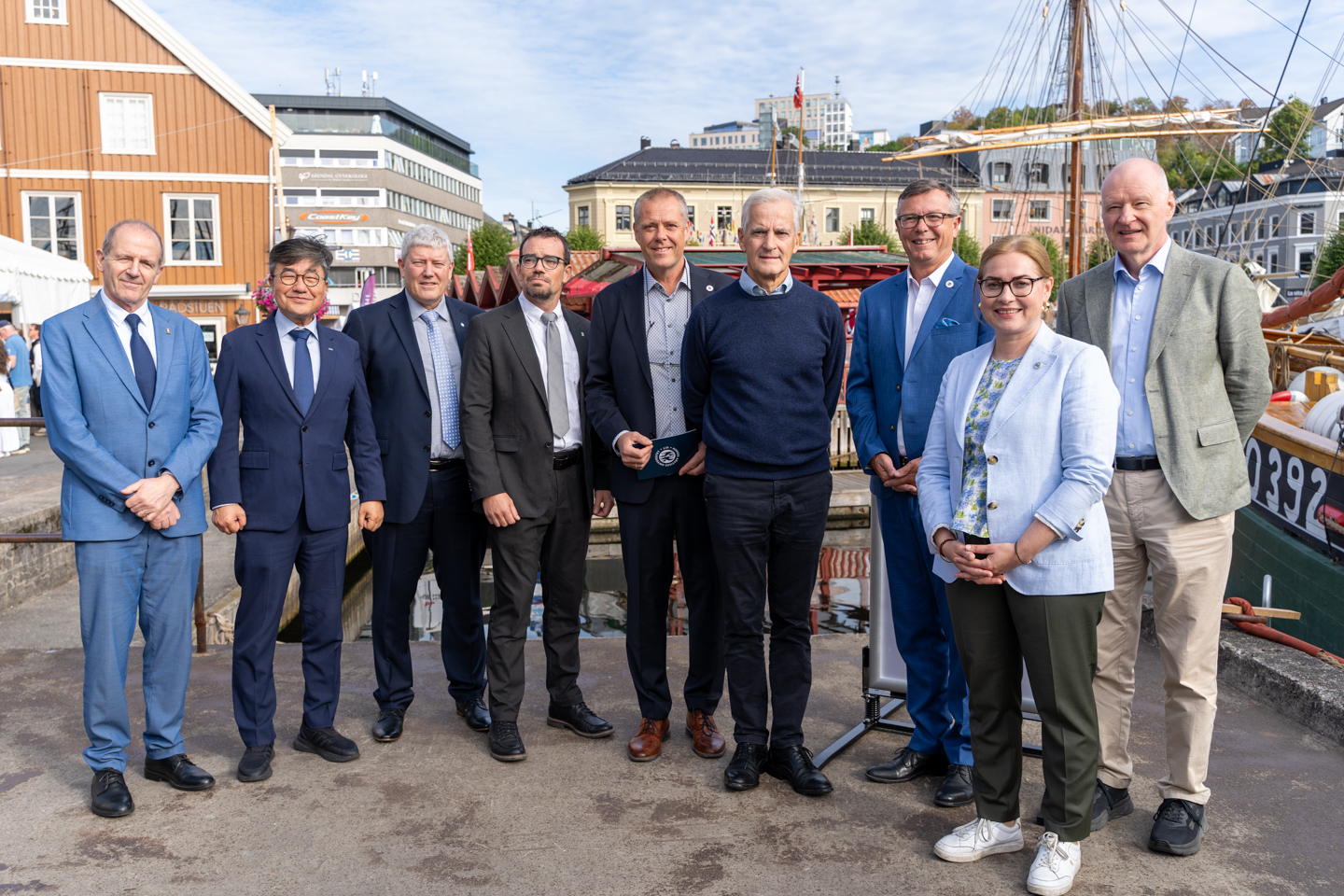
Arendal, Norway — What happens at the poles affects everyone. Rapid change in the Arctic and Antarctic — just 10% of the planet — will profoundly shape the future of the other 90%, influencing climate, sea levels, food systems, water security, biodiversity, economies and human well-being worldwide. Norway‘s Prime Minister Jonas Gahr Støre announced today in Arendal that aninternational consortium will host the International Coordination Office (ICO) for the Fifth International Polar Year (IPY-5) the global initiative taking place in 2032-33. Based in Tromsø, Norway, the ICO will coordinate the global effort to build the knowledge, partnerships, resilience and capacities needed for the polar regions to thrive in an increasingly uncertain future. In his address,Støre emphasised the importance of broad international scientific cooperation in an increasingly turbulent and polarised world. The Prime Minister believes that, by hosting the secretariat together with Chile and South Korea, Tromsø will become a cornerstone of what may be the most significant international research endeavour of our time.
The consortium consists of The Arctic University of Norway (UiT), the Norwegian Polar Institute (NPI), the Korea Polar Research Institute (KOPRI), and the Chilean Antarctic Institute (INACH), spanning Europe, Asia, and South America and bringing together research communities from both the Arctic and Antarctic. Norway and UiT will serve as the ICO's physical host and lead financial contributor, with the main office based in Tromsø. Two regional offices hosted and funded by KOPRI and INACH will also be established. Although based across three continents, the ICO is designed to function as a single coordinating body, speaking with one voice and ensuring consistent support, endorsement processes, and engagement opportunities across all regions. The office will be fully funded with a budget of $10 million USD over nine years, beginning January 1, 2027, and will support the IPY-5 Executive Committee and Planning Group on all matters concerning the International Polar Year 2032-33.
Leaders of the four international organizations guiding preparations for IPY-5 — the Scientific Committee on Antarctic Research (SCAR), the International Arctic Science Committee (IASC), the International Science Council (ISC) and the World Meteorological Organisation (WMO) —welcomed the announcement, which coincides with the SCAR Open Science Conference in Oslo.
Central to the ICO's mandate will be ensuring the meaningful participation and leadership of Indigenous Peoples and the inclusion of Indigenous knowledge systems throughout IPY-5. A dedicated Indigenous liaison officer will be among the consortium's first two priority appointments. The office will also promote open science and support the participation and leadership of early-career researchers.
„Knowledge from both polar regions provides a unique basis for seeing the big connections. International collaboration contributes with different perspectives and ensures that IPY-5 becomes a unifying and inclusive platform for research and knowledge development. Few places in the world bind the Earth's two polar regions together in a stronger way than Tromsø.“ — Camilla Brekke, Director of the Norwegian Polar Institute
„The polar regions affect far more than just the climate in the north and south. It is also about global societal changes, geopolitics, resource management and how people live and work in these areas. The ambition is to strengthen the knowledge base across many disciplines.“ —Dag Rune Olsen, Rector of UiT
„We are at a critical time, with changes accelerating at both poles. Strong representation across the world in the International Coordination Office for IPY-5 will ensure we are global in our response to the changes we are seeing first at the poles but are increasingly being felt around the world.“ — Gary Wilson, President, SCAR
„What motivates me most is the chance to build on years of collaboration with Indigenous Peoples and Arctic communities and bring them into IPY-5 as full partners from the beginning. This coordination office gives us a foundation to advance science that is grounded in genuine partnership as we navigate rapid change together.“— Matthew Druckenmiller, President, IASC
„IPY-5 is a unique opportunity to transform our ability to observe, understand and anticipate change across the Earth system. By strengthening observing systems, international partnerships, scientific capacity and the sharing of trusted information, it will support better decisions and more resilient societies worldwide—and create a legacy that endures long beyond 2033.“— Dr Narelle van der Wel, World Meteorological Organization
„The IPY-5 is a unique opportunity to advance scientific knowledge of the polar regions while reminding us that the world's greatest challenges can only be addressed through international cooperation. The International Programme Office will bring together expertise from the Global North and South, enable scientists to work across borders to deepen our understanding of these rapidly changing regions and reaffirm that science is a powerful platform for collaboration and peaceful dialogue.“ — Salvatore Aricò, CEO of the International Science Council
,,IPY, inherently a once-in-a-generation opportunity, has evolved each time, and the fifth of its series should now be ready for a truly global engagement amidst these unprecedented planetary-scale changes. To provide the right scientific answers relevant to the challenges of our time, IPY-5 needs the best possible coordination, and the global polar community can be assured that the new ICO is prepared to be the key vehicle.“ — Hyoung Chul Shin, President of the Korea Polar Research Institute (KOPRI)
„The close proximity of the southern tip of South America to Antarctica is a powerful reminder that Antarctica is not remote from us—it is deeply connected to our region and our future, making it more urgent than ever that we deepen our understanding of it. We will foster and help coordinate IPY-5, championing strong Latin American participation while engaging all five Antarctic gateway countries to build a more integrated and influential Antarctic community—and to strengthen the connections between the two polar regions.“ — Gino Casassa, Director of the Chilean Antarctic Institute (INACH)
IPY-5 is jointly sponsored by IASC, SCAR, ISC and WMO and guided by an Executive Committee comprising representatives of the four organizations. Together, they have supported an interim secretariat during the initial planning phase; the new ICO will assume this coordination role in early 2027. Planning continues with the formation of National Committees, the upcoming first call for project endorsements, and support from a Planning Group of more than 36 international organisations.
What happens at the poles affects everyone. IPY-5 will unite the world‘s scientific community to meet that change with the knowledge, partnerships, and resilience the moment demands.
About IPY-5 The Fifth International Polar Year (IPY-5) will bring the world together to understand rapid change in the Arctic and Antarctic and its far-reaching effects on climate, sea levels, food and water security, biodiversity, and economies worldwide. Uniting countries, disciplines, and knowledge systems (including Indigenous, traditional and local knowledge) IPY-5 aims to deliver a transformational leap in scientific understanding through advances in satellite technology, autonomous observing systems, and artificial intelligence.
IPY-5 builds on more than 140 years of international polar cooperation across four previous IPYs: the first in 1882–83, which pioneered international scientific collaboration in the polar regions; the second in 1932–33, which advanced understanding of the Earth's magnetic field and atmosphere; the International Geophysical Year of 1957–58, which established permanent Antarctic research stations and helped lay the groundwork for the Antarctic Treaty; and the fourth IPY of 2007–08, the largest polar research effort to date, which deepened our understanding of climate change and highlighted the role of Indigenous communities in polar science. Its lasting legacy will be measured not by a single discovery, but by the observing systems, partnerships, and scientific capacity it leaves behind to help societies anticipate and respond to a rapidly changing world.
Media Contact
• Jørgen Berge, Prorector, UiT The Arctic University of Norway Jorgen.berge@uit.no , Phone Number: +47 901-6915
• Lindsay Arthur, IPY-5 Interim Secretariat, ipy-secretariat@iasc.info
IPY5 News
Republic of Korea to Host the Joint SCAR-IASC Polar Conference in 2030
The Scientific Committee on Antarctic Research (SCAR) and the International Arctic Science Committee (IASC) are excited to announce that the Republic of Korea has been selected as the host for the Joint SCAR-IASC Polar Conference in 2030. This decision was made following a comprehensive selection process by both SCAR and IASC Delegates.
Posted on 08 October 2024
Read this article
Call for Organisations to Join the International Polar Year (IPY) 2032-33 Planning Group
The planning for the 5th International Polar Year in 2032-33 is currently underway. Planning discussions have been underway between 31 organisations since 2021 and an initial IPY-5 Concept Note and planning timeline was published in October 2023.
Posted on 11 July 2024
Read this article